Bus vs Uber for Airport Transport: Which One to Choose?
Book a fixed-price airport transfer if door-to-door convenience matters more than the last few pounds, but if you're specifically weighing a coach against Uber, here's exactly how the two compare in 2026, airport by airport.
Key Takeaways
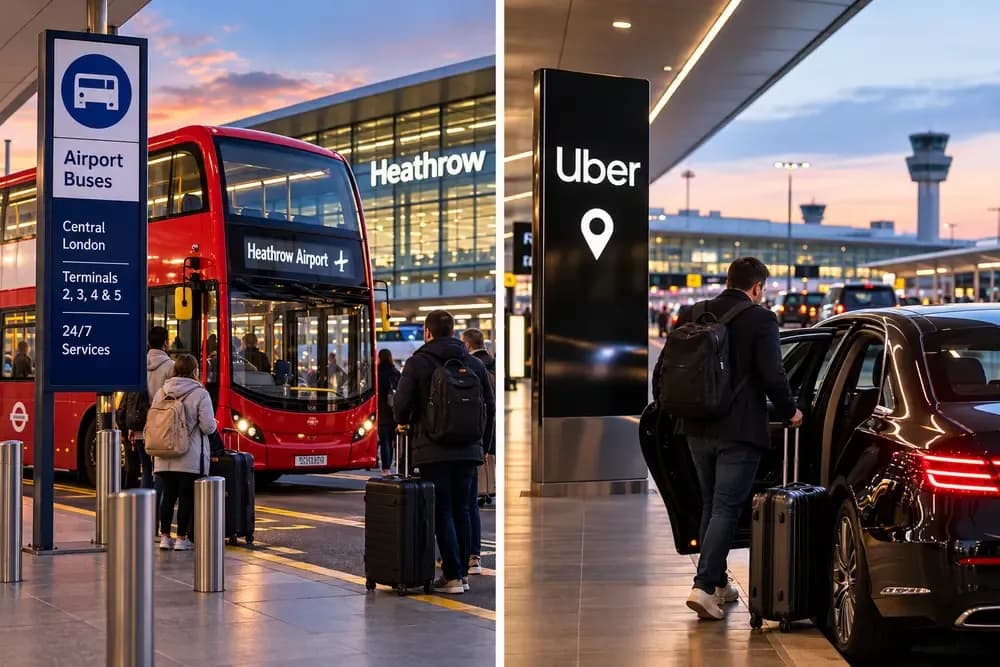
- National Express coaches are the cheapest way into London from every major airport, with advance fares from £5–£15 one-way, typically a third to a half of what Uber costs for the same route.
- Coaches run 24 hours a day, making them the only guaranteed public transport option for the earliest and latest flights, when trains have stopped running.
- Uber's price is no longer fixed the way a coach ticket is. Since 2 January 2026, 20% VAT applies to every London Uber and Bolt fare, and surge pricing of 1.5x–3x can apply during busy arrival periods, exactly when airport demand peaks.
- Journey time favours Uber decisively under normal traffic. A coach into London typically takes 60–120 minutes depending on traffic, against 30–90 minutes for a private car covering the same route.
- The right choice depends entirely on what you're optimising for: coaches win on price and overnight reliability, Uber wins on time and door-to-door convenience, when it isn't surging.
01. How Coach Pricing and Timing Actually Work
National Express runs direct services from every major London airport into central pickup points, no connection required. Advance fares typically start from £5 (Stansted) to £8–£15 (Heathrow, Luton), rising closer to the travel date, with a Change & Go add-on (around £5) letting you board any coach 12 hours either side of your original booking if plans shift.
Coaches run around the clock, often with 24+ departures a day even on quieter routes, making them the most dependable option for very early morning or very late night arrivals when rail services have either finished for the night or not yet started.
The trade-off is entirely about time. A coach shares the road with everyone else, so journey times are directly exposed to traffic. What might be a 40-minute drive in clear conditions can stretch to 90–120 minutes at peak times, more than double a comparable Uber journey outside of surge.
02. How Uber Pricing Has Changed in 2026
Uber and Bolt fares in London now include 20% VAT on the full amount, effective 2 January 2026, following HMRC's closure of a scheme that previously let ride-hailing operators apply VAT to commission only rather than the whole fare. This alone has added roughly £10–15 to a typical airport-length journey compared with 2025 pricing.
On top of that, surge pricing remains fully in effect: multipliers of 1.5x to 3x apply during high-demand periods, and airport pickup times cluster demand in exactly the way that triggers surge, early mornings, evening arrival waves, and any period when several delayed flights land in quick succession.
03. Airport-by-Airport Comparison
Heathrow: National Express coach from around £8 one-way, 35–65 minutes to Victoria in good traffic. Uber typically £35–85 off-peak, rising past £100 during surge.
Gatwick: Coach fares are competitive with the train here since Gatwick's rail links are already efficient; Uber remains a reasonable off-peak option but is exposed to surge around Gatwick's own busy arrival windows.
Stansted: Coach from around £5, the cheapest of any London airport route, running 75–120 minutes depending on traffic. Given Stansted's role as Ryanair's largest UK base, Uber surge here is some of the sharpest of any London airport around the concentrated early-morning departure schedule.
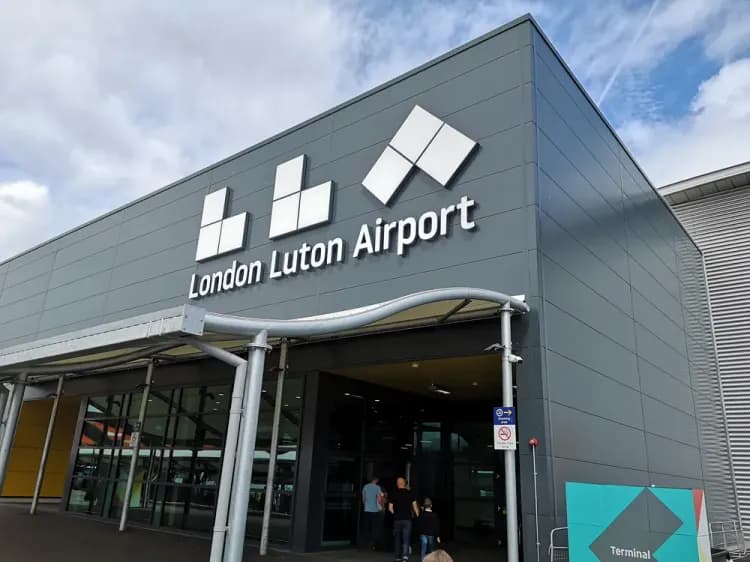
Luton: Coach from around £7, 40–90 minutes depending on traffic. Luton's own heavy early-morning Ryanair, easyJet and Wizz Air schedule creates similar Uber surge risk to Stansted.
London City: Coaches are less relevant here given the airport's proximity to the centre and the DLR's direct terminal access; Uber tends to be the more practical of the two for this specific airport given the short distances involved.
04. Head-to-Head Comparison
| Factor | National Express Coach | Uber/Bolt |
|---|---|---|
| Typical one-way fare | £5–£15 (advance booking) | £35–£85 off-peak, £100+ surge |
| Journey time | 60–120 min (traffic-dependent) | 30–90 min (traffic-dependent) |
| Operating hours | 24 hours a day | 24 hours, subject to driver availability |
| Door-to-door? | No, fixed pickup/drop points | Yes |
| Price certainty | Fixed at booking | Varies with demand |
| Rebooking flexibility | Change & Go add-on (~£5) | Free cancellation up to 1h (Reserve) |
| Luggage handling | Self-managed, overhead storage | Self-managed, boot space limited by car size |
05. When the Coach Wins
Budget is the deciding factor. For a solo traveller or someone with no time pressure, a coach ticket booked a few days ahead is consistently the cheapest way into London from any major airport.
Very early or very late flights. Coaches run through the night on a fixed timetable, exactly when trains have stopped and Uber pricing is most likely to be volatile due to reduced driver availability.
Groups on a tight budget. Multiple coach tickets, while not as cheap per head as splitting a single Uber fare, still often undercut a full Uber fare, particularly if surge is in effect.
06. When Uber Wins
Time is worth more than the fare difference. If you need to be somewhere specific quickly and traffic isn't unusually heavy, Uber's door-to-door routing beats a fixed-route coach that stops at set points regardless of your actual destination.
Off-peak travel with no surge in effect. Under normal conditions, Uber remains competitively priced against a taxi, even with the new VAT included, though rarely cheaper than the coach.
Short-distance airports like London City, where the coach's cost advantage narrows considerably given the shorter overall journey.
07. Where Both Fall Short for an Actual Airport Journey
Neither option handles the single biggest airport-specific problem well: flight delays. A coach runs on its own fixed schedule regardless of when your flight actually lands, a delay just means a longer wait at the airport for the next departure. Uber requires opening the app and booking once you've cleared arrivals, exposing you to whatever surge multiplier happens to be active at that exact moment, often the worst possible time given how demand clusters around delayed arrival waves.
A pre-booked, fixed-price transfer like GM Rides avoids both problems: the fare is locked in before you fly, and your driver tracks your flight automatically, adjusting pickup time for a delay at no extra cost, closer to a coach's price certainty but without the fixed schedule or shared journey time.
08. Comfort, Amenities and Luggage Allowance
National Express coaches on airport routes typically include onboard WiFi, USB charging points at most seats, air conditioning, and a toilet on board, genuinely comparable to a budget flight's cabin experience rather than a bare-bones bus. Luggage allowance is usually one large case and one piece of hand luggage per passenger included in the fare, stored in an underfloor hold rather than carried on, which some travellers find more comfortable than negotiating boot space in a car with three other suitcases.
Uber's comfort obviously depends entirely on the specific vehicle and tier booked. A standard UberX has limited boot space, generally fine for one or two cases, but a group with four passengers and full luggage may need to book a larger vehicle tier at a further premium, eroding some of Uber's apparent time advantage once the actual booking process is factored in.
09. Environmental Considerations
Coach travel is consistently the lower-carbon option per passenger for a shared journey, since a single coach replaces dozens of individual car journeys covering the same route. This is a genuine consideration for travellers weighing environmental impact alongside cost and time, National Express has also been expanding its use of more fuel-efficient coach models on core routes. An Uber journey's environmental footprint depends heavily on the specific vehicle, electric and hybrid options are increasingly available to select within the app, though not guaranteed unless specifically requested.
Time matters more than a modest cost saving, and you're travelling outside of surge windows? Uber is the faster, more convenient choice, especially for shorter routes like London City.
You want fixed pricing and door-to-door convenience without exposure to surge or a fixed timetable? A pre-booked private transfer solves both the coach's speed problem and Uber's price unpredictability at once.
How We Compared These: Our Methodology
Coach fares and journey times are drawn from National Express's own published route information and advance fare structures. Uber and Bolt figures reflect documented off-peak baselines and surge multipliers, alongside the confirmed 20% VAT change effective 2 January 2026. Airport-specific surge risk is assessed against each airport's known departure and arrival schedule concentration (for example, Stansted and Luton's heavy early-morning low-cost carrier schedules) rather than treated as a single London-wide average.
FAQs
Is the coach always cheaper than Uber?
Almost always for a solo traveller, yes, though the gap narrows for groups splitting a single Uber fare, and can occasionally reverse if a heavily discounted Uber promotion is available.
Do coaches run all night?
Yes, National Express operates 24-hour services on most major airport routes, making coaches the most dependable public transport option for the earliest and latest flights.
Why is Uber more expensive in 2026 than it used to be?
Two separate factors: the ongoing surge pricing model that's always applied, and a new 20% VAT charge on the full fare, in effect since 2 January 2026, which alone has added roughly £10–15 to a typical airport journey.
Which airport has the worst Uber surge risk?
Stansted and Luton, given their concentrated early-morning low-cost carrier departure schedules, which create sharp, predictable demand spikes at specific times of day.
Does the coach have WiFi and charging points?
Most National Express airport services include onboard WiFi and USB charging at most seats, along with a toilet, a more comfortable experience than a bare-bones bus route.
How much luggage can I bring on the coach?
Typically one large case plus one piece of hand luggage per passenger is included in the fare, stored in an underfloor hold rather than carried on board.
Is the coach more environmentally friendly than Uber?
Generally yes, on a per-passenger basis, since a single coach replaces many individual car journeys along the same route, though an Uber booked in an electric or hybrid vehicle narrows that gap.
Sources: National Express (nationalexpress.com), Transport for London and HMRC guidance on 2026 VAT changes, London airport transfer market reporting (2026).